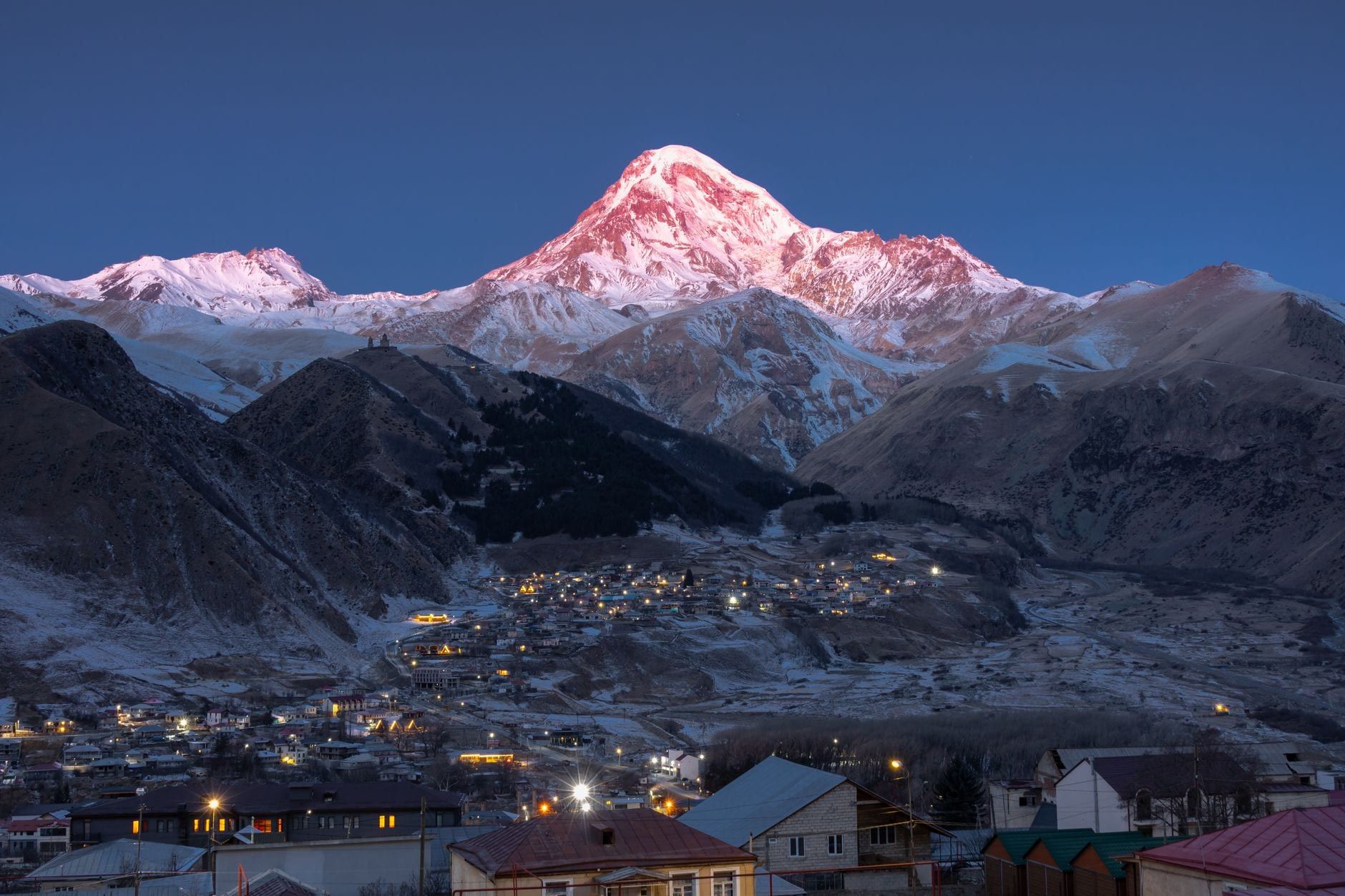
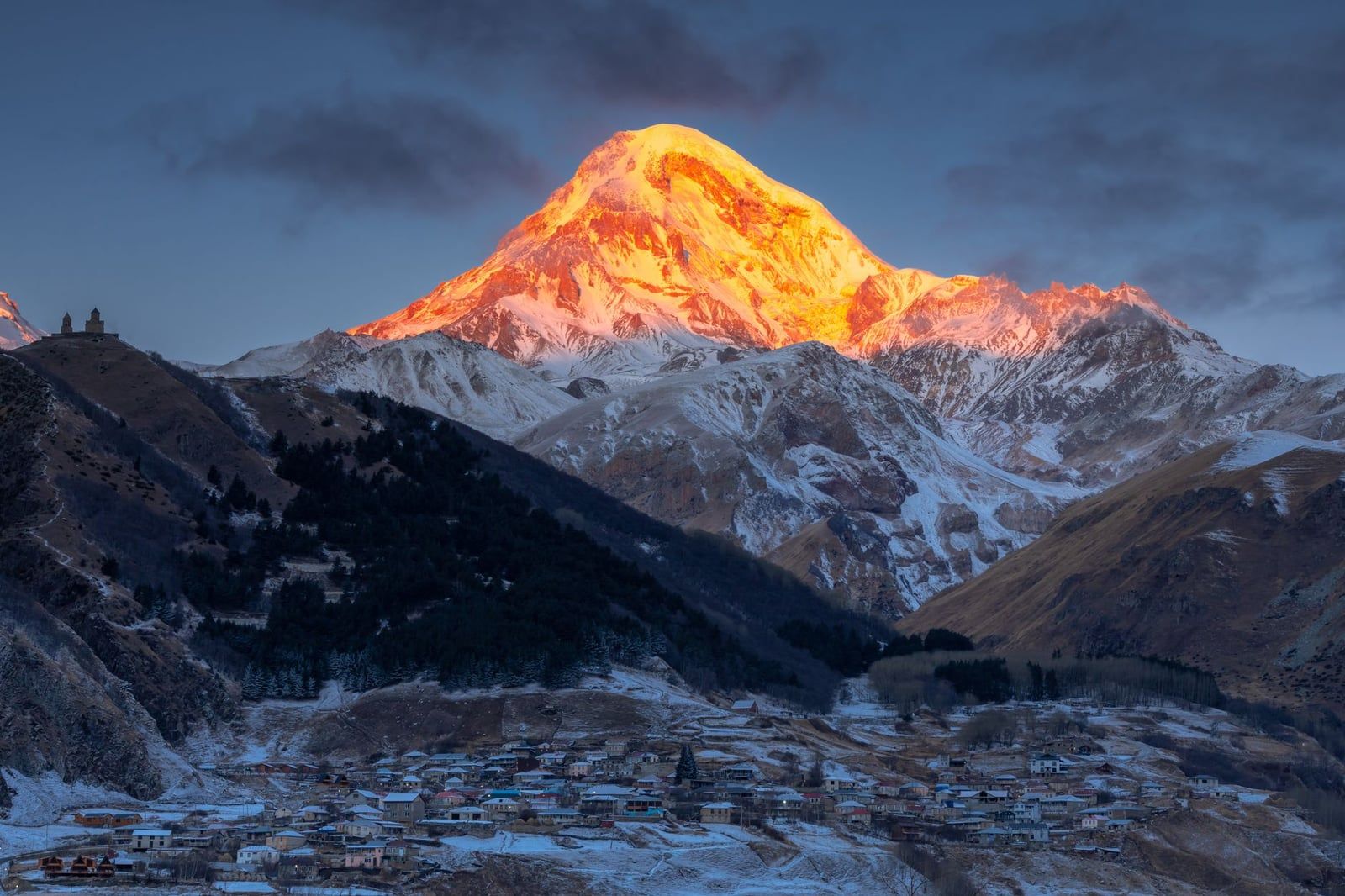
Kazbegi — the town most locals still call by its Soviet-era name, officially Stepantsminda since 2006 — sits at 1,740 m beneath Mount Kazbek, a 5,054 m volcano that spends most of the winter wearing a fresh coat of snow. Come between December and March and you get the same stone church, the same valley, and a fraction of the summer crowds, at prices 30–40% lower. What you trade for that is predictability.
The road over the Jvari Pass closes in heavy snow, the summer trails are buried until late spring, and the thermometer at Gergeti Trinity Church can read −10°C before wind chill. This guide gives you the honest ledger first, then the month-by-month conditions, road logistics, transport costs, and a packing list built for ice — everything you need to decide whether winter Kazbegi is your trip.
Is Kazbegi Worth Visiting in Winter?
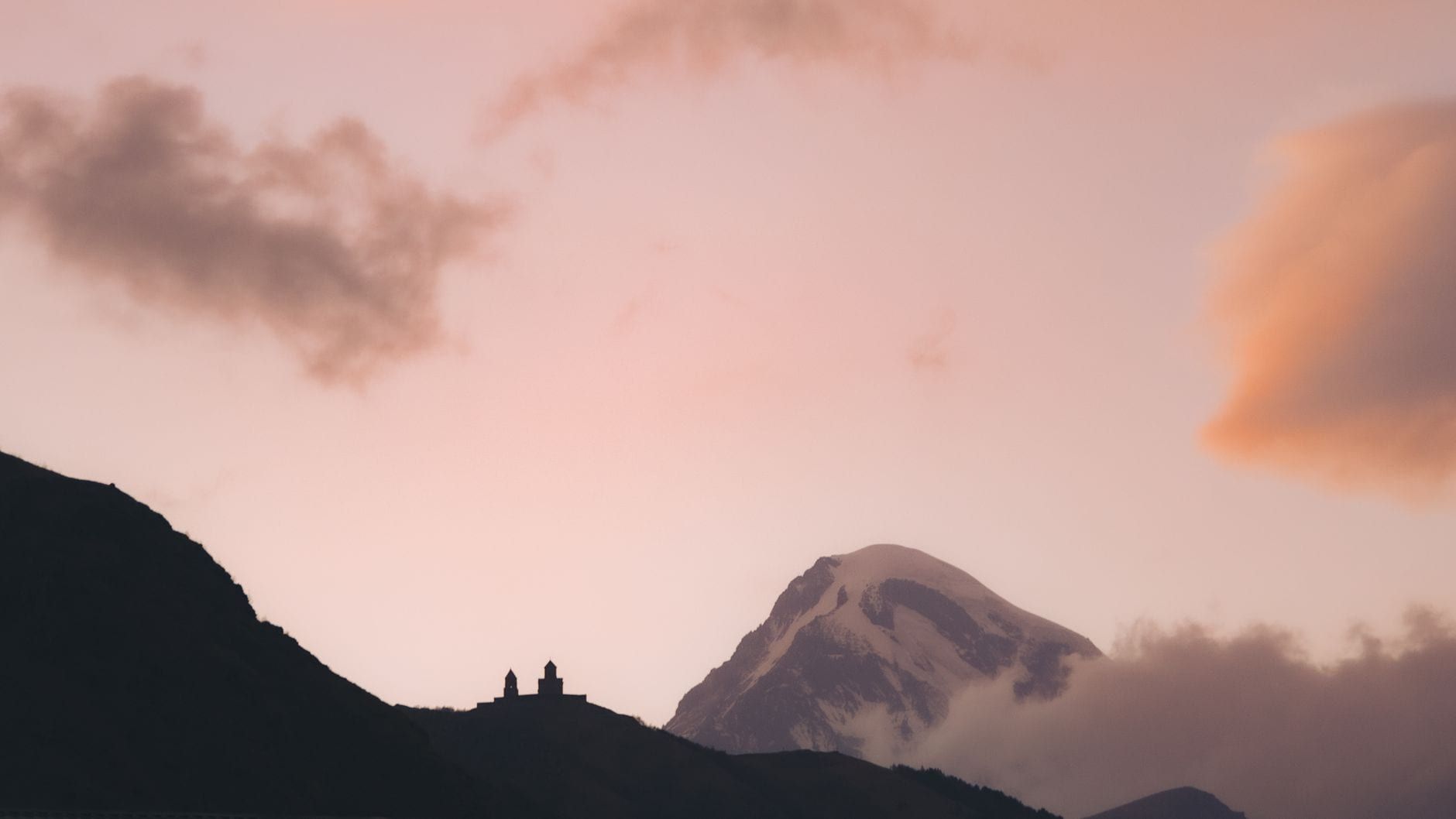
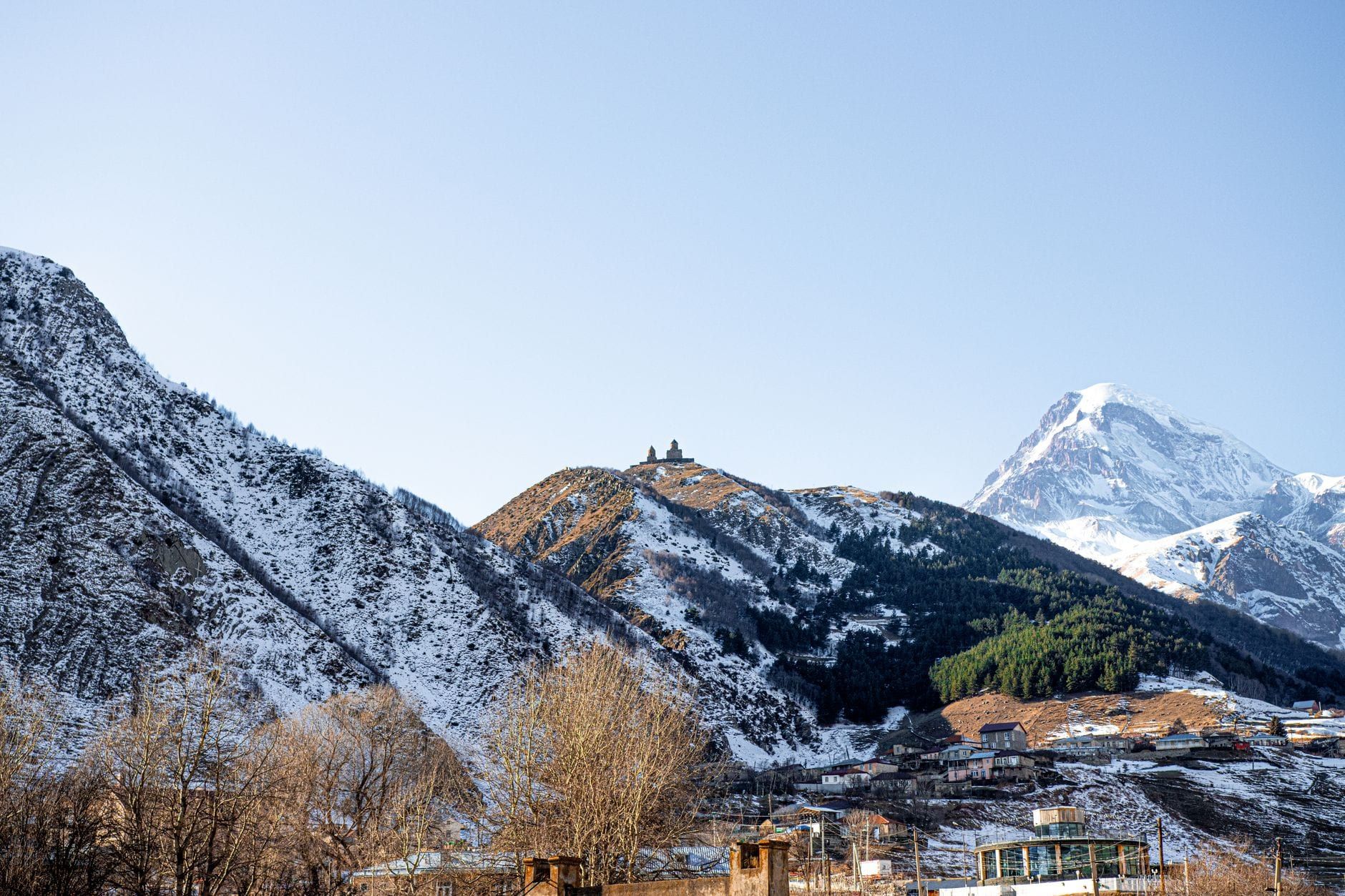
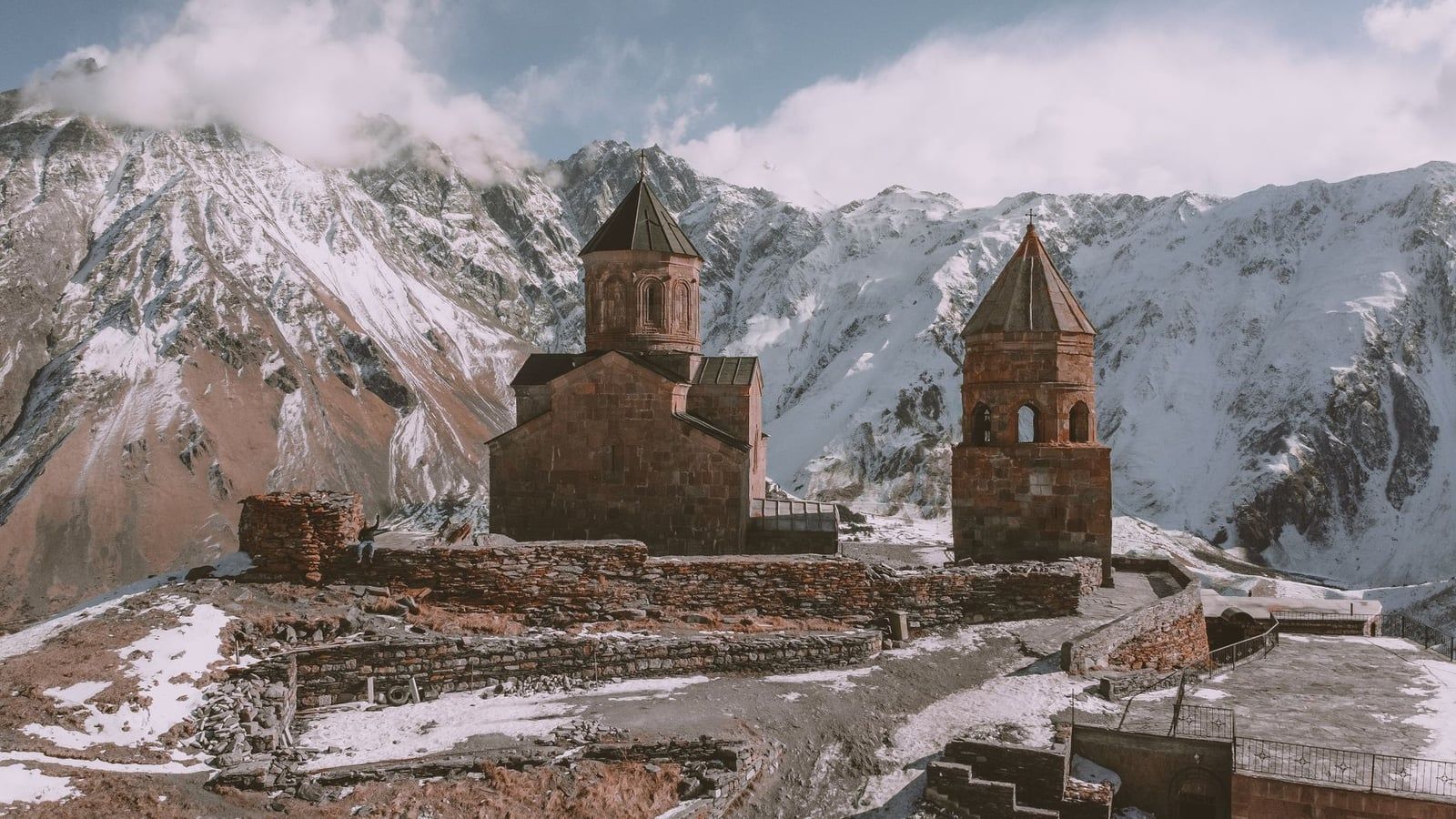
Yes — if you can shift your dates by a day or two and don't mind serious cold. The payoff is the classic view of the 14th-century Gergeti Trinity Church standing alone against a white Kazbek, with nobody else in the frame. In July you'd share that terrace with three coach groups. In January it's often just you, the wind, and a monk or two, because the monastery is active year-round.
The low season also means money. Guesthouse rates drop 30–40% from summer peaks, and while some small cafes shut for the winter, the majority of guesthouses and the larger restaurants stay open. Add Gudauri's ski resort 30 km down the same highway and you have a region that genuinely works in winter, not one that hibernates.
Now the costs. The Jvari Pass between Gudauri and Kazbegi closes during heavy snow and avalanche risk, and most years Kazbegi is cut off at least once for several days. The track up to the church turns to sheet ice. Truso, Sno and Juta — the valleys that fill summer itineraries — are unreachable until late spring. And it is cold in a way Tbilisi visitors underestimate: −5°C in town before wind chill, and colder the higher you climb. Here's the trade laid out side by side.
| Winter (December–March) | Summer (June–September) | |
|---|---|---|
| Crowds | Near-empty viewpoints and trails; low season | Busy, especially July–August |
| Reliability | Pass closures possible any day; fog risk high | Road closures unlikely; all valleys accessible |
| Scenery | Snow-draped church and volcano; above-the-clouds mornings | Green valleys, wildflowers, open hiking to 3,300 m |
| Photography | Clearer winter air, snow contrast, pink alpenglow at 08:00 | Softer light, longer golden hours |
| Cost | Rooms 30–40% cheaper | Peak-season pricing |
Go in winter if your dates flex, you dress properly, and a closed pass would cost you a rescheduled day rather than a missed flight connection. Skip it if Kazbegi is squeezed into a single fixed day of a tight itinerary, or if you're drawn by the summer hikes — those simply don't exist from December to March. A cloud-free summer day is the safer, easier trip. A clear winter morning is the better photograph.
Kazbegi Winter Weather by Month: December to March
Temperature in Kazbegi is a ladder, not a number. Stepantsminda (1,740 m) sits at −5 to +5°C through the season. Gergeti Trinity Church, 420 m higher at 2,170 m, runs −10 to 0°C. The Jvari Pass (2,379 m) holds between −10 and −5°C. Wind chill takes another 5–10°C off all of those, and at the church there is no shelter to speak of.
December
Early December is storm-prone and unreliable — snow arrives in pulses, and you can catch a dry, brown pre-winter lull. Conditions firm up as the month goes on, then the New Year holiday arrives and brings Tbilisi traffic with it. Come before roughly 20 December for quiet, or embrace the festivities and book ahead.
January
The coldest month, with daytime highs in Stepantsminda averaging around −4°C and nights far below that. The snow cover is at its most reliable and the scenery at its most dramatic — bare rock against deep white. January is the month for photographers who can stand the cold, and for skiers, since Gudauri's best snow starts mid-month.
February
The heaviest snowfall of the year lands in February, with average snow depth near 12 inches, highs around 4°C and lows around −6°C in town. Expect the tallest snow walls along the cleared highway — often 2–4 m high where the ploughs have cut through. Storm days close the pass; the day after a storm is the day you want.
March
Days stretch and the valley thaw begins, turning low-lying ground to slush and mud while the church above stays white. March suits travellers who want winter scenery with slightly less punishment, and it overlaps Gudauri's season, which typically runs to mid-April. Pack for both seasons at once.
Whatever the month, plan around daylight. You get roughly eight to nine hours: sunrise near 08:00, sunset near 17:00. That leaves a tight window for the church, viewpoints and photos, so an early start from Tbilisi — around 07:30 — buys you the whole usable day rather than half of one.
Is the Road to Kazbegi Open in Winter?
The Georgian Military Highway itself never closes for the season — it's a main freight route and a land link to Russia, ploughed and maintained year-round. What closes is the Jvari Pass section between Gudauri and Kazbegi, where avalanche paths cross the road. When conditions turn, the barrier goes down and reopening is decided on the day, usually within hours, occasionally after one to three days.
So check the road status the day before you travel, not the week before. The Georgian Roads Department publishes closure announcements through its Facebook page and hotline, and your guesthouse or driver in Kazbegi will know the current situation better than any forecast. A week-old forecast tells you nothing about a pass that opens and closes inside a single afternoon.
Travel in the morning. Clearing crews work overnight, so the road is at its best early, and afternoon thaws soften the surface and refreeze it into ice by evening. Even when the pass is officially open, ice can persist on the shaded sections — that's why winter tyres are compulsory on this road in the cold season, and why the 23 km of switchbacks north of Gudauri demand respect.
One useful escape hatch: when the road section closes, the 9.5 km Kobi–Gudauri cable car is the designed backup crossing between the two sides of the pass. It's little-known outside Georgia and won't move your car, but it can move you. The planning rule that matters more: build slack. Two possible travel days instead of one is the difference between a story and a stranded afternoon.
How to Get to Kazbegi in Winter
Four ways cover the 152 km from Tbilisi, and winter sorts them fast. Full detail on routes and timetables is in our guide to getting to Kazbegi; here's how each option behaves when the pass is behaving badly.
| Option | Cost | Time (one way) | Winter verdict |
|---|---|---|---|
| Marshrutka van | 20 GEL per person | 3–4 hours | Cheapest, but no flexibility at a closure |
| Private driver / transfer | From ~190 GEL per car | 2.5–3.5 hours | Best all-round winter choice |
| Rental car (self-drive) | From ~$35/day | 3–3.5 hours | Only with 4WD and chains |
| Guided day tour | From ~$25–59 per adult | 6–8 hours with stops | Fine if the operator reschedules flexibly |
The marshrutka leaves Didube bus station when full — 11 departures a day from morning until late afternoon, so arrive 30–45 minutes early. Twenty lari is hard to argue with until the pass closes and you're sitting in a van at a barrier for four to eight hours with no updates and no heater guarantee. In deep winter, that's a real scenario, not a scare story.
A private transfer is the default winter choice for good reason. Platforms like GoTrip or a private tour with a vetted driver cost from around 190 GEL per car, flat, with winter tyres fitted as the law requires, chains on board, and a driver who checks the road status before setting off. You also stop where you want — Ananuri, the Friendship Monument, a photo of the snow walls — which turns the drive itself into the sightseeing.
Self-drive is for confident winter drivers only, and only in a 4WD with chains, on winter tyres, and with no schedule pressure. Group day tours sit in between: the fixed itinerary is a liability when the pass decides otherwise, so book only with an operator whose cancellation and reschedule policy is genuinely weather-flexible — most reputable ones are, because they deal with this every week.
Day Trip or Overnight? Planning a Winter Itinerary
A winter day trip works under three conditions: your dates can shift, you're in a private driver's car rather than a shared schedule, and you accept that the church may be inside a cloud that day. Meet those and a day trip delivers — the drive up the Military Highway is half the experience, and day tours from Tbilisi that stop at Ananuri and the Friendship Monument make six to eight hours of travel feel like sightseeing rather than transit.
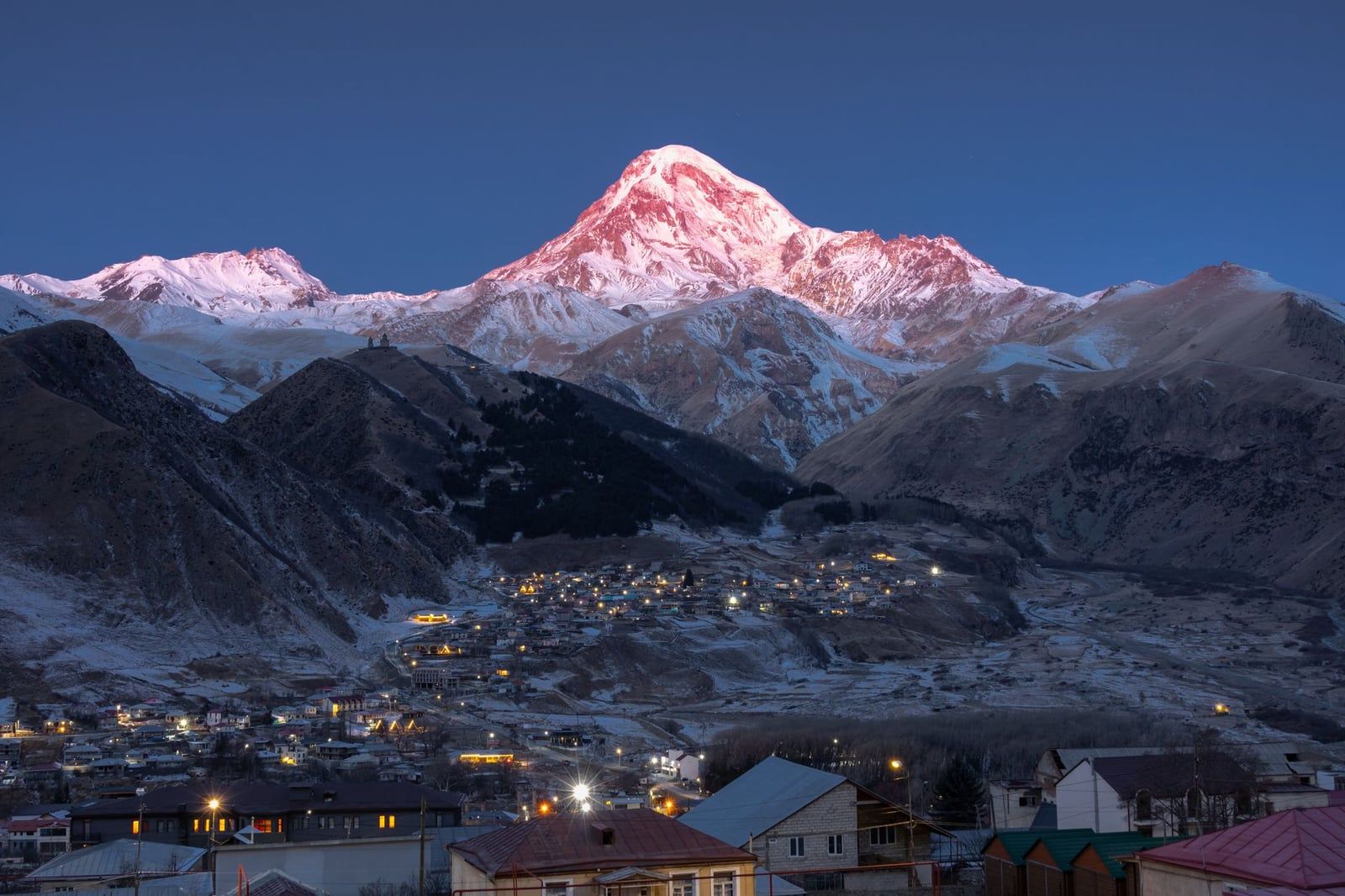
Overnight earns its keep for different reasons. The best winter views come on the morning after fresh snowfall, when the storm has cleared, the snow is untracked, and the 08:00 sunrise puts pink alpenglow on Kazbek. Fog and low cloud swallow the church routinely in the afternoon — the mountain hides on its own schedule. Sleeping in Stepantsminda puts you there when the odds are best.
How many nights? Two is the sensible hedge against fog and closures, since it buys you two mornings and a spare travel day. Add a third if you're combining Gudauri, which is the classic winter combo: sleep on the mountain at Gudauri, where accommodation runs ₾60–300 a night, then continue the 30 km — about 40 minutes — to Kazbegi the next morning while the light is still working for you.
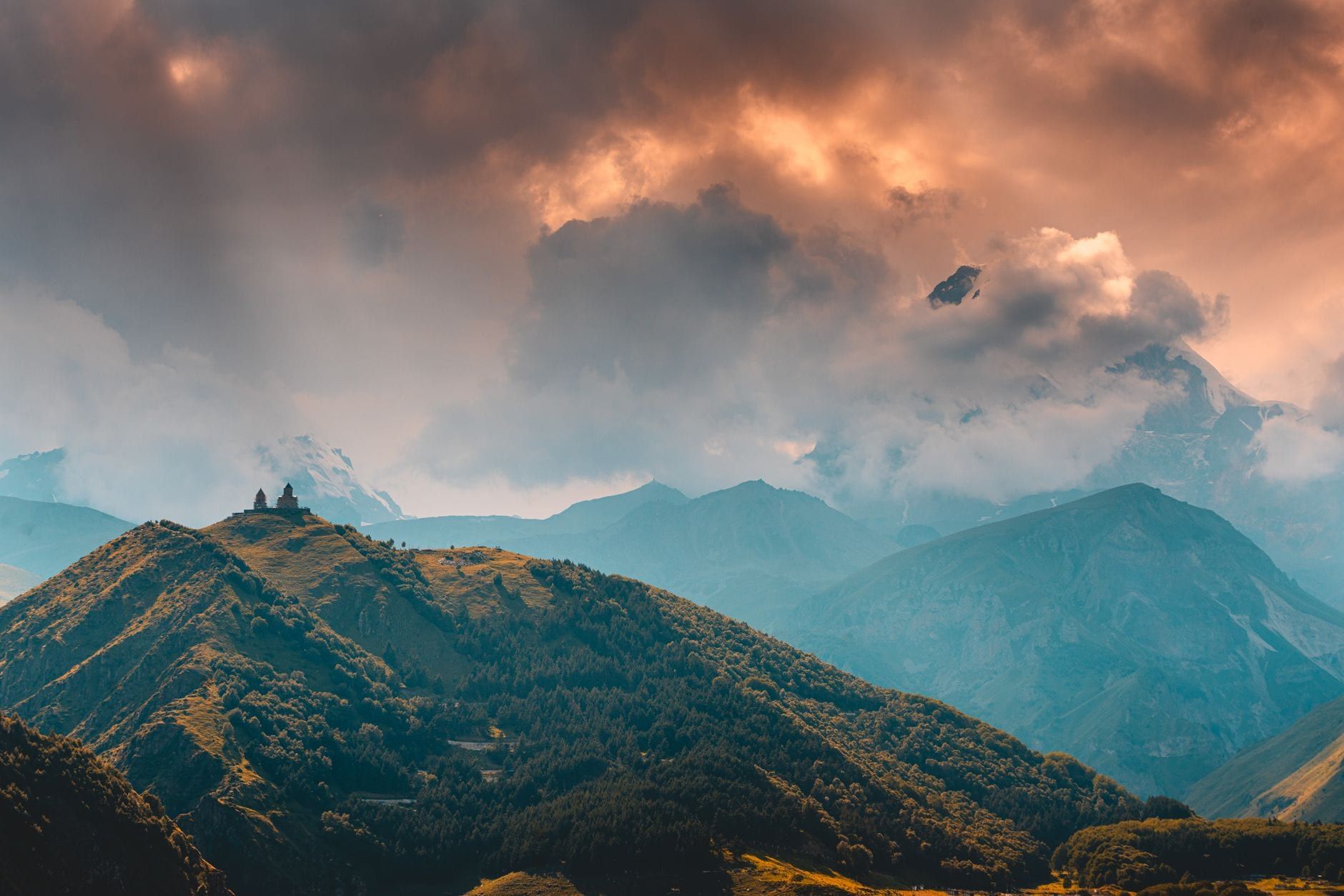
There's a view that only exists in winter, and it's the reason photographers make the trip: the clouds often sit lower than Gergeti Trinity Church, so from the churchyard you look down on a white sea with Kazbek's summit breaking through above it. If you're shooting, note that the air is cleaner and drier in winter than in summer haze — sharper images, better contrast, and phone batteries that die in 30–40 minutes at −10°C. Keep devices in an inside pocket and warm them between shots.
Things to Do in Kazbegi in Winter
Strip a summer Kazbegi itinerary down to what's actually open from December to March and you're left with a short, strong list: the church, the highway stops, Gudauri's slopes, and snowshoeing across whatever terrain holds snow. Here's each one, with an honest access verdict for the season — and the valleys that stay closed until spring.
Gergeti Trinity Church
The church is the reason most people come, and it stays reachable through most of the winter. Entry is free, it's open daily 09:00–17:00, and it's a working monastery — monks live there year-round, so dress rules apply: women cover head and shoulders with a skirt or dress to at least the knee, men wear long trousers and remove hats. Wraps and headscarves are handed out at the entrance, and photography inside is not allowed.
You have two ways up, and winter changes the maths. A 4x4 taxi takes 20–25 minutes for about 40 GEL return — agree the fare before setting off — and the driver negotiates the steep, bumpy dirt track that can be polished ice in patches. Walking the roughly 7 km round trip is a different proposition in January than in July: it becomes a genuine winter hike needing boots and, after fresh snow or freeze, crampons or microspikes. It's 60–75 minutes up in normal conditions; allow more on snow, and don't attempt it in fog. Access can pause during or right after heavy snowfall until the track is cleared — the full picture, including the route and what to expect at the top, is in our guide to Gergeti Trinity Church.
Gudauri Skiing
Gudauri, 120 km from Tbilisi and 30 km south of Kazbegi, is the region's main winter draw. The resort runs 57 km of runs across four zones, the season typically lasts from late December to mid-April, and the best snow falls from mid-January through March. A one-day ski pass costs ₾90–120 with full equipment rental at ₾40–70. Even non-skiers use Gudauri well — it's the most reliable overnight base on the highway, and several Kazbegi and Gudauri combination tours build the two into one two-day trip.
What's Closed Until Spring
Be honest with yourself about the summer sights. Truso Valley and the Sno Valley access points stay off-limits until May or June; the Juta road only opens from late May to October; the Gveleti waterfall trail turns icy and effectively shuts. The Gergeti Glacier trek to roughly 3,200 m is a hard day in summer and a no in winter. For what the region holds when everything is open, our things to do in Kazbegi guide covers the full list.
The winter alternative is snowshoeing. Local guides run snowshoe trips on the gentler terrain above Stepantsminda and toward the church plateau, and they deliver what the closed valleys can't: quiet movement through deep snow with Kazbek in view. Book through your guesthouse or a local operator the day before, once you know the weather.
En-Route Stops That Still Work
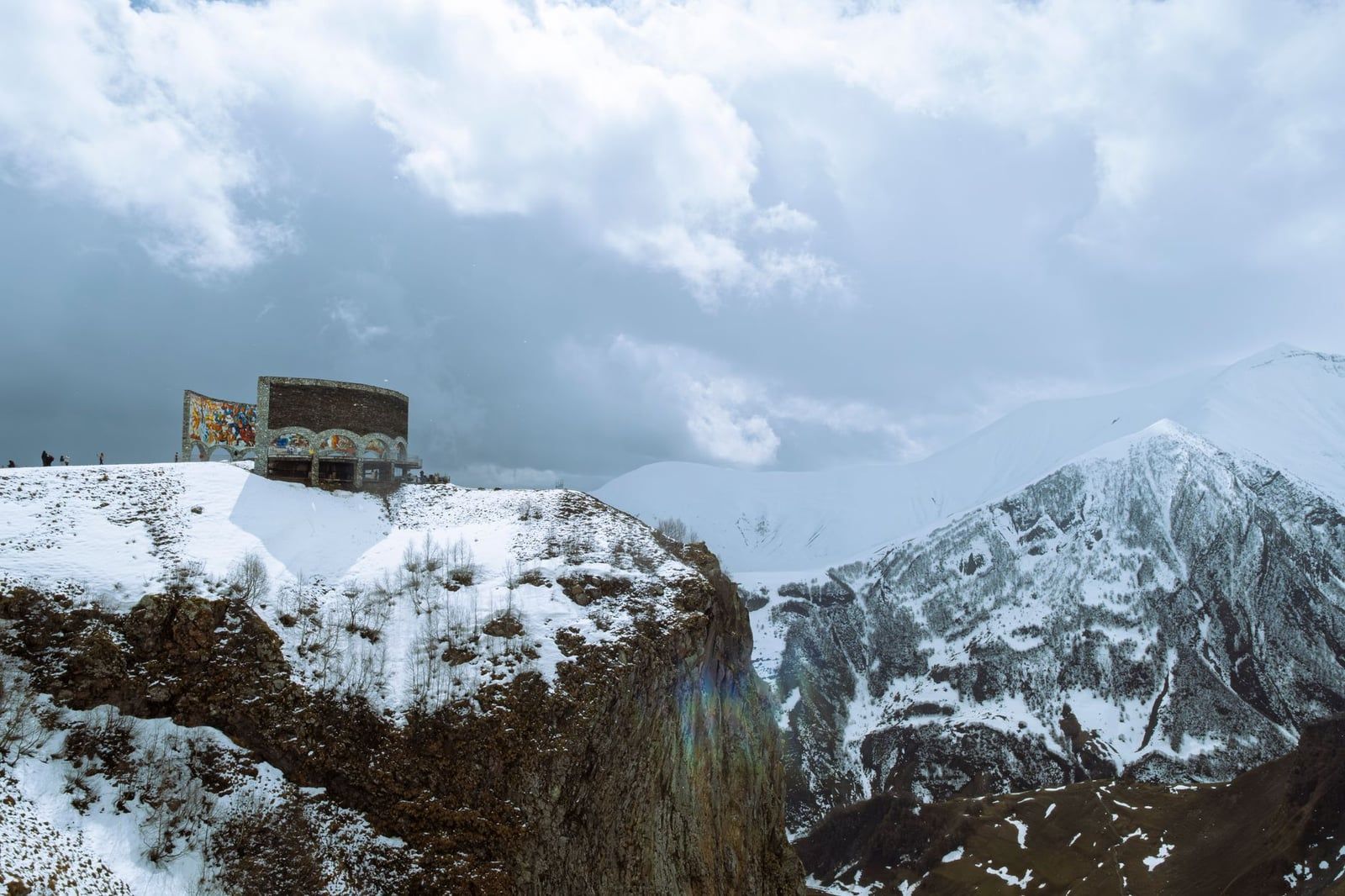
The drive up the Military Highway carries its own sights, and they stay open all winter. Ananuri Fortress, the 17th-century Aragvi stronghold above the Zhinvali Reservoir, is free to enter (3 GEL parking) and its churches close only in the evening. The Russia–Georgia Friendship Monument at the pass — a curving tiled archway over a sheer drop — is more photogenic under snow than in any other season. Watch the gorge walls for frozen waterfalls on the final stretch toward Stepantsminda; they're a roadside bonus you don't get in July.
Christmas and New Year
Georgia celebrates Orthodox Christmas on 7 January, about a week after the Western date, and both Kazbegi and Gudauri run events across the holiday stretch. The mood is festive and the mountains are at their most photogenic. The catch is logistics: late December through early January brings holiday traffic up the highway and crowd spikes in Gudauri, and accommodation fills. Book early, or arrive after 10 January when the region empties again and low-season quiet returns.
Where to Stay and Eat in Kazbegi in Winter
The majority of guesthouses and the larger restaurants stay open all winter; some smaller cafes don't. That's the whole availability picture — but always have a dining backup in mind in case the place you'd planned on is shuttered. Your guesthouse will almost certainly feed you dinner and breakfast if you ask, which is the winter default anyway.
Two questions matter more than the view from the window, so ask them before paying: does the room have heating, and is hot water available 24/7? Most guesthouses heat with wood or gas, and the honest answers vary. Mid-range rooms run about 120–150 GEL a night before the 30–40% low-season discount. At the top end, Rooms Hotel Kazbegi — the five-star option — charges ₾300–500 with central heating and windows framing the church.
Where to base yourself follows your priorities. In town puts you beside the marshrutka stop, the shops and the restaurants. On the hill buys the views. Gergeti village, partway up the church trail, puts you closest to the trailhead — worth it if you're hiking up at dawn. Whichever you choose, bring cash: many guesthouses and small restaurants don't take cards at any time of year, and in winter that bites harder. ATMs include the Liberty Bank machine on the main street and the TBC/Bank of Georgia machines inside Rooms Hotel.
What to Pack for Kazbegi in Winter
Pack for ice and glare, not just for cold. The list below assumes you're going up to the church at 2,170 m, where the wind strips heat fast and the path can be a skating rink. If you plan to hike rather than ride, move microspikes from optional to essential.
- Layers: thermal base, fleece mid-layer, windproof down or ski shell.
- Boots with non-slip soles — the church approach gets pure ice.
- Wool trekking socks, never cotton.
- Hat, gloves (mittens over liners), neck gaiter.
- Sunglasses — snow glare at 2,170 m is stronger than it looks from the car.
- Thermos, power bank, spare camera battery, microspikes and poles if hiking.
Two items earn special mention. The thermos, because there is no cafe at Gergeti Trinity Church and you'll want hot tea at −10°C while you wait for the clouds to move. And the power bank plus spare batteries, because an active phone battery dies in 30–40 minutes at those temperatures — keep everything warm in an inside pocket until the moment you need it, and you'll still have a working phone for the ride down.
Frequently asked questions
Is Kazbegi open in winter?
Yes — the town and the Georgian Military Highway operate all year, but the Jvari Pass section closes temporarily during heavy snow and avalanche risk. Closures are usually decided on the day and last hours, occasionally one to three days, so check the road status the day before you travel.
Can you visit Gergeti Trinity Church in winter?
Usually, yes. A 4x4 taxi runs up in 20–25 minutes for about 40 GEL return — agree the fare first. Access can pause during or right after heavy snowfall until the track is cleared, and walking up becomes a genuine winter hike that needs proper boots or crampons.
What is the best month to visit Kazbegi in winter?
January and February bring the most stable snow cover and the most dramatic scenery. February has the heaviest snowfall of the year, with average depth near 12 inches. The best days come right after a fresh snowfall when the skies clear — book two nights so you don't gamble on one morning.
Do you need a 4x4 or private driver for Kazbegi in winter?
A private driver is strongly recommended. Winter tyres are compulsory on this road, drivers fit chains and track the daily road status, and they can reroute or wait out a closure. Self-driving without 4WD and chains is not advised, and marshrutka passengers can wait 4–8 hours at a closed barrier.
How cold does Kazbegi get in winter?
Stepantsminda (1,740 m) ranges −5 to +5°C, with January daytime highs averaging around −4°C. Gergeti Trinity Church at 2,170 m runs −10 to 0°C, and wind chill takes another 5–10°C off — dress for it.
Is Gudauri the same place as Kazbegi?
No. Gudauri is a ski resort about 120 km from Tbilisi on the same highway, with a season running late December to mid-April and day passes at ₾90–120. Kazbegi/Stepantsminda lies about 30 km further north, and the two are often combined into one two-day winter trip.